

The United States is moving forward with yet another strategic intervention in the Middle East, this time through energy.
Washington, in cooperation with Iraq and Syria, is working toward the revival of the historic Kirkuk – Baniyas oil pipeline, approximately 800 kilometers in length, which will transport crude oil from Kirkuk to the Syrian port of Baniyas, bypassing the Strait of Hormuz, according to a report by the Middle East Eye.
Officially, the plan is presented as an alternative export route for Iraqi oil.
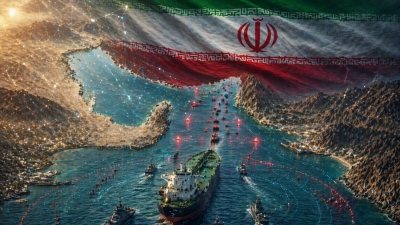
However, according to sources cited by the publication, its real goal is the reduction of the geopolitical influence of Iran in the Strait of Hormuz, one of the most important energy passages on the planet.

Energy as a tool of geopolitics
This initiative highlights once again the way in which energy policy is linked to the broader strategic pursuits of the great powers.
The pipeline, constructed in 1952, stopped operating in the 1980s, when Syria sided in favor of Iran in the Iran – Iraq war.
Its infrastructure suffered further destruction after the American invasion of Iraq in 2003, with the result that today essentially a full reconstruction is required.
The fact that the American military intervention itself contributed to the destruction of the energy infrastructure and now American companies appear as the main candidates for its rebuilding reasonably raises questions about who ultimately benefits economically from the geopolitical realignments in the region.

American companies at the center
According to the Middle East Eye, a consortium of American companies has already been pre-selected for the construction of the new pipeline, a project estimated to last two to three years.
The promotion of the plan is largely attributed to Tom Barrack, ambassador of the United States to Turkey and special envoy for Syria and Iraq, who reportedly played a decisive role in the negotiations with the Iraqi Prime Minister Ali al-Zaidi.
The official presentation of the plan is expected to coincide with the visit of Ali al-Zaidi to the White House, where he will meet with the American President Donald Trump, while his program also includes a visit to Texas, the "heart" of the American oil industry.

Tom Barrack
A plan that weakens Iran
The geopolitical importance of the project is directly linked to the effort to limit the strategic influence of Iran.
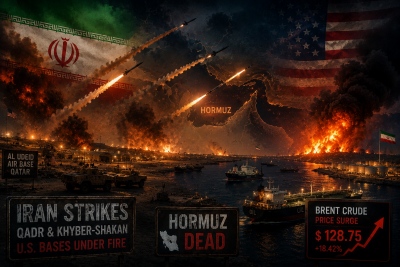
After the tension that prevailed in the Strait of Hormuz, Iraq was forced to temporarily use road transport of oil through Syria, a solution that proved limited.
The new pipeline would create a permanent export route toward the Mediterranean, reducing the dependence on Hormuz and, consequently, limiting the ability of Tehran to affect international energy flows.
Competition with the plans of Israel
The project does not only affect Iran but also the energy plans of Israel.
Prime Minister Benjamin Netanyahu has repeatedly proposed the transportation of oil and natural gas from the Persian Gulf through Saudi Arabia toward Israeli ports in the Mediterranean, while the Minister of Energy Eli Cohen has presented a specific proposal for a land pipeline that will connect Saudi Arabia with Eilat and subsequently with the Eilat – Ashkelon pipeline.
The Kirkuk – Baniyas route offers, however, an alternative path that completely bypasses Israel, reinforcing a broader commercial axis of Iraq – Syria – Turkey toward Europe.

The real goals of Washington
Although the American side presents the project as an economic investment and an initiative for regional cooperation, analysts point out that the energy policy of the United States in the Middle East historically connects with broader geostrategic designs.
The revival of the pipeline is not limited to increasing the oil exports of Iraq, but reinforces the American influence on the energy infrastructure of the region, creates significant business opportunities for American companies, and alters the balances against both Iran and the alternative energy routes promoted by other regional players.
At the same time, the implementation of the project is considered anything but easy.
The serious security risks in Syria, the regional confrontations, and the different geopolitical pursuits of the involved states may turn the pipeline into a new field of competition.
One more chapter in the American policy of the Middle East
The case of the Kirkuk – Baniyas pipeline shows that energy continues to constitute a basic tool for the exercise of power in the Middle East.
Whether presented as a plan for economic development or as a project for energy security, the reality is that behind such initiatives new geopolitical balances are formed.
Whether the plan will indeed lead to greater stability or will open a new cycle of competition in the region remains an open question.
In any case, Washington appears determined to use energy diplomacy once again as a means of reinforcing its strategic influence in the Middle East.
How Iran will react
The revival of the Kirkuk – Baniyas pipeline does not constitute merely an energy project, but a development with significant geopolitical implications for Iran.
Tehran historically considers the Strait of Hormuz as one of its most fundamental strategic advantages, as a large part of the global oil trade passes through there.
If the new pipeline is put into operation, Iraq will acquire an alternative export route toward the Mediterranean through Syria, reducing its dependence on Hormuz.
Such a development would limit, to some extent, the influence that Iran can exert on the energy flows of the region.
Analysts estimate that Tehran will hardly watch passively the implementation of a plan that reinforces the American presence in the energy infrastructure of the Middle East.
It is likely to seek the reinforcement of its political and economic ties with Baghdad, increase its diplomatic activity in Syria, and accelerate its cooperation with partners such as Russia and China, in order to maintain its regional influence.
At the same time, the implementation of the project could constitute yet another field of competition between Washington and Tehran, in a period where energy security and commercial corridors acquire an ever greater importance for the geopolitical balance of the Middle East.
www.bankingnews.gr




Σχόλια αναγνωστών